|
|
"The finest concert organ in Europe"
- Marcel Dupre, 1929
The 1929 Instrument
"... all the old majesty was there, as overwhelming as ever, and with additional beauties provided by modern advances in tonal colour and control. " - G. D. Cunningham
"A veritable masterpiece of all modern organ craftsmanship. " - Andre Marchal
"The Lord Mayor, the Sheriffs and the distinguished guests who supported them, left the Alexandra Palace visibly impressed by their unique musical experience. More glorious than ever before, one of the great organs of the world had been re-born." - Ivan Barwell
" As restored, there is no doubt that the instrument is a marvel of flexibility, completeness of control, and magnificence of tone [...] with all the resources of the splendid instrument drawn on, is a thing only to be believed when it is heard, the whole a wonderful musical experience." Kaikoshru Sorabji
"The restoration of this masterpiece of my grandfather's has been to all concerned a labour of love from start to finish. "- Henry Willis III
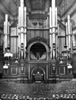
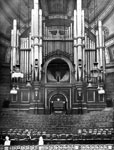
| The external appearance of the instrument was only slightly changed; with the newly enclosed
expression box for the Solo Organ now visible above the front pipes on the left. |
 |
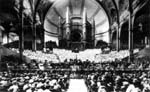
| Here is a general view of the front of the hall at the Great Handel Festival
Concert. |
 |
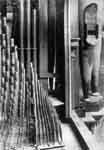
| Here is a spectacular view of the front of the Great Soundboard in the foreground of one of the
32ft towers. This over-length display rank, comprising some of the largest organ pipes
ever made, was tragically vapourized in the 1980 fire. |
 |
|
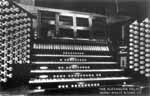
The 1929 Willis III console. This is in every respect the standard Willis III console, with
the tilting-tablet couplers (multiple pitches, naturally) and the swell pedal selector panel.
The current console largely comprises the components visible here, but some of the surrounding
wordwork is new. |
 |
|
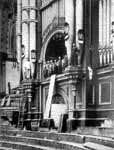
A good illustration of the scale of the facade of the instrument and the 32ft front.
The men visible are workers from the Willis factory. |
 |
|
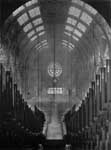
Looking hall-ward over the Great passage-boards to the distant hall with the clock and
rose window beyond. In the current organ, this view is almost as spectacular but the Hall
has changed significantly in appearance due to the post-fire rebuild. |
 |
|
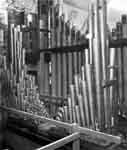
Along with the heavy-pressure pedal reeds at 32' and 16', the four Tubas shown here were,
and remain, the loudest stops in the instrument. Available from the Solo manual, and
speaking on 30" of wind pressure they fill the Hall with an impressive sound.
|
 |
|
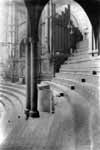
This photograph, of the side of the instrument,
taken by Henry Willis III on 7th June 1926, is the only example which shows the layout
of the 32‘ Pedal Sub Bass, a stop also lost in the 1980 fire.
|
 |
|
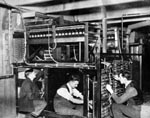
Behind the console, three Willis men work on connecting the new mechanism.
|
 |
|
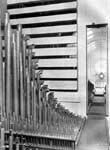
The Rotunda caption reads "Looking through the organ from within the new Choir swell-box :
the treble side of the Choir Organ only is shown in the picture. This department contains what
are probably the most effective Mutations in any modern organ, specimens that would have
rejoiced the heart of Dom Bedos without doubt."
|
 |
|
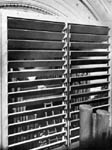
The Rotunda caption reads "A striking view of the Swell Organ showing how the soundboards
are disposed on different levels, etc. The tops of the Tuba basses are visible in the
foreground."
|
 |
|
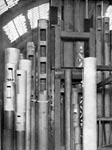
The Rotunda caption reads "This illustration shows how the tubes of the lowest 7 notes
of the Pedal Contra Bombarde have been made full length, and also indicates the fact
that the organ front itself is composed of speaking pipes and not dummies."
|
 |
|
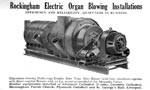
Deep in the basement, the organ's blowing plant provided large volumes of wind at two
different pressures and, via a small attached generator, direct current for the organ's action.
|
 |
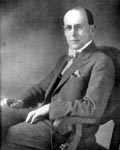 |
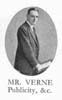
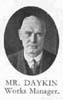
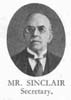
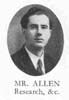
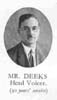
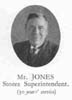
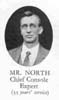
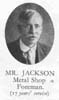
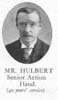
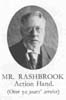
Henry Willis III, the grandson of the original builder and the leader of the Willis
Firm at the time of the 1929 rebuild. Some of his staff who were involved in the work
are depicted below.
|
|
The Specification
Pedal Organ
|
23 stops
|
| |
| 78. | Double Open Bass (from 82) | 32 |
| 79. | Double Open Diapason | 32 |
| 80. | Sub Bass (from 84) | 32 |
| 81. | Open Bass No. 1 | 16 |
| 82. | Open Bass No. 2 | 16 |
| 83. | Contra Basso | 16 |
| 84. | Bourdon | 16 |
| 85. | Bass Viola | 16 |
| 86. | Octave | 8 |
| 87. | Principal (1) | 8 |
| 88. | Viola (from 85) | 8 |
| 89. | Flute | 8 |
| 90. | Super Octave (1) | 4 |
| 91. | Octave Viola (from 88) | 4 |
| 92. | Octave Flute (from 89) | 4 |
| 93. | Sesquialtera | III |
| 94. | Mixture (2) | III |
| 95. | Bombarde (1) | 32 |
| 96. | Trombone (1) | 16 |
| 97. | Ophecleide (2) | 16 |
| 98. | Clarion (2) | 8 |
| 99. | Octaves on Pedal Chorus (1) | |
| 100. | Octaves on Pedal Chorus (2) | |
|
Choir Organ
|
17 stops, enclosed
|
| |
| 44. | Contra Viola | 16 |
| 45. | Viola da Gamba | 8 |
| 46. | Viola Celestes (Tenor C) | 8 |
| 47. | Claribel Flute | 8 |
| 48. | Lieblich Gedact | 8 |
| 49. | Dulciana | 8 |
| 50. | Gemshorn | 4 |
| 51. | Viola | 4 |
| 52. | Nason Flute | 4 |
| 53. | Nazard | 2 2/3 |
| 54. | Piccolo | 2 |
| 55. | Tierce | 1 3/5 |
| 56. | Mixture | III |
| 57. | Corno-di-Basetto | 8 |
| 58. | Cor Anglais | 8 |
| 59. | Trumpet | 8 |
| 60. | Clarion | 4 |
| | Tremulant |
|
Great Organ
|
21 stops
|
| |
| 1. | Double Open Diapason | 16
| | 2. | Bourdon | 16
| | 3. | Open Diapason No. 1 | 8 |
| 4. | Open Diapason No. 2 | 8 |
| 5. | Open Diapason No. 3 | 8 |
| 6. | Clarabella | 8 |
| 7. | Quint | 5 1/3 |
| 8. | Octave No. 1 | 4 |
| 9. | Octave No. 2 | 4 |
| 10. | Flute Couverte | 4 |
| 11. | Octave Quint | 2 2/3 |
| 12. | Super Octave | 2 |
| 13. | Seventeenth | 1 3/5
| | 14. | Furniture | II |
| 15. | Sesquialtera | III |
| 16. | Mixture | III |
| 17. | Double Trumpet | 16 |
| 18. | Trumpet-harmonic | 8 |
| 19. | Trumpet | 8 |
| 20. | Posaune | 8 |
| 21. | Clarion | 4 |
|
Swell Organ
|
22 stops, enclosed.
|
| |
| 22. | Double Open Diapason | 16 |
| 23. | Lieblich Bourdon | 16 |
| 24. | Open Diapason No. 1 | 8 |
| 25. | Open Diapason No. 2 | 8 |
| 26. | Flute Couverte | 8 |
| 27. | Rohr Flute | 8 |
| 28. | Salicional | 8 |
| 29. | Vox Angelica (Tenor C) | 8 |
| 30. | Principal | 4 |
| 31. | Flauto Traverso | 4 |
| 32. | Twelfth | 2 2/3 |
| 33. | Fifteenth | 2 |
| 34. | Furniture | II |
| 35. | Sesquialtera | III |
| 36. | Mixture | III |
| 37. | Waldhorn | 16 |
| 38. | Cornopean | 8 |
| 39. | Hautboy | 8 |
| 40. | Vox Humana | 8 |
| 41. | Clarion | 4 |
| 42. | Contra Posaune | 16 |
| 43. | Trumpet | 8 |
| | Tremulant |
|
Solo Organ
|
17 stops, enc. apart from 74-77
|
| |
| 61. | Violoncello | 8 |
| 62. | Tibia | 8 |
| 63. | Viole d'Orchestre | 8 |
| 64. | Violes Celestes (BB) | 8 |
| 65. | Flute-harmonique | 8 |
| 66. | Octave 'Cello | 4 |
| 67. | Concert Flute | 4 |
| 68. | Solo Nazard | 2 2/3 |
| 69. | Piccolo-harmonique | 2 |
| 70. | Basoon | 8 |
| 71. | Orchestral Oboe | 8 |
| 72. | Orchestral Clarinet | 8 |
| 73. | Tubular Bells - 20 notes |
| | Tremulant |
| 74. | Contra Tromba | 16 |
| 75. | Tromba-harmonic | 8 |
| 76. | Tuba-harmonic | 8 |
| 77. | Clarion-harmonic | 4 |
|
Standard array of Willis III inter and intra-manual couplers at 16', 8' and 4' pitches, controlled via
'Tilting Tablets' above Solo Manual.
Willis III 'Toggle Touch' manuals.
Usual variety of playing aids including 8 thumb/foot pistons to each division, 8 thumb/foot general pistons.
Balanced expression pedals to Choir, Swell and Solo
|